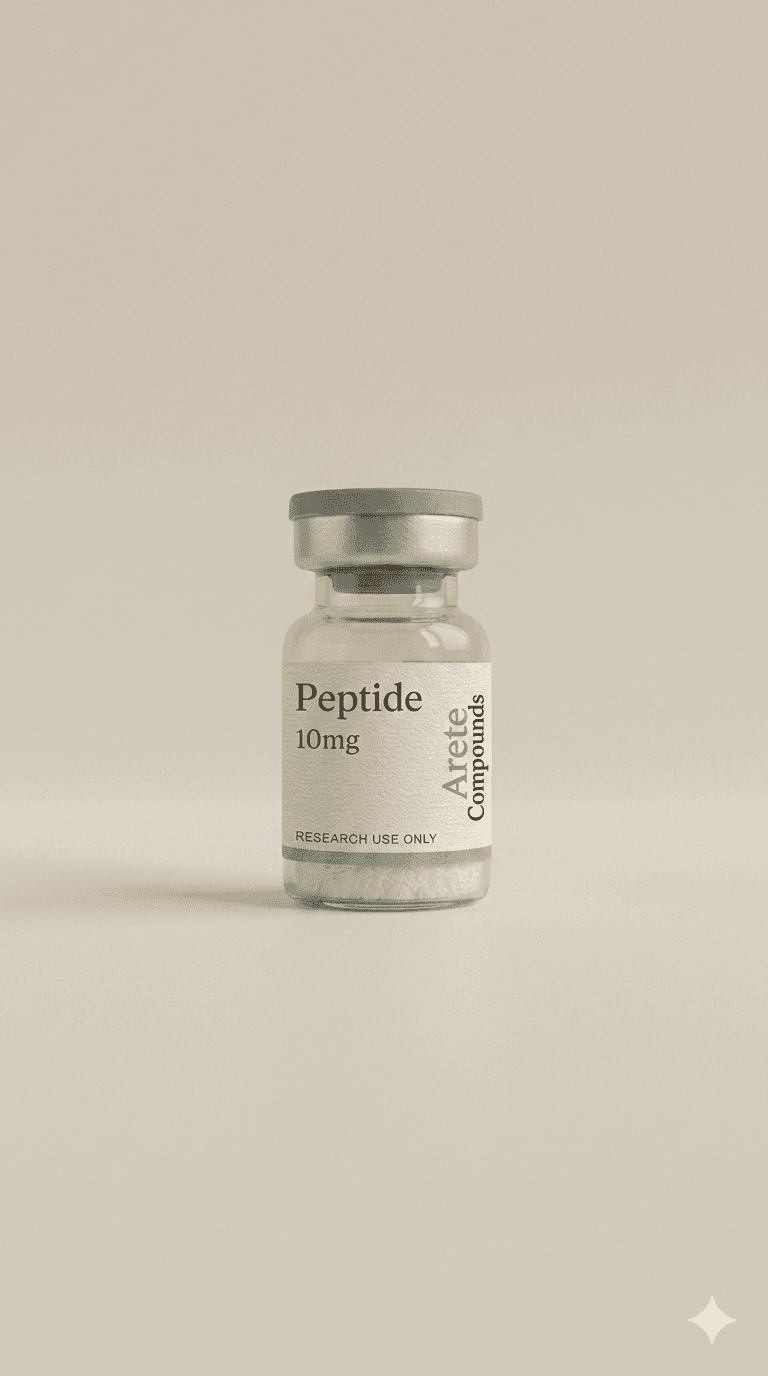
KLOW
RecoveryMulti-peptide recovery research blend.
Description
KLOW is a combination research blend of four peptides (BPC-157, TB-500 [TB-4 fragment], GHK-Cu, and KPV), supplied together in a single lyophilized vial for in-vitro study of tissue-repair and recovery signaling. Each lot is third-party verified for identity and purity. Sold strictly for research use, not for human or veterinary use.
Storage & handling
Store lyophilized vials at -20 °C, protected from light and moisture. Keep sealed until use and avoid repeated freeze–thaw cycles. Handle per your laboratory's standard operating procedures.
Research applications
- Tissue-repair and recovery signaling studies
- Combination / synergy research across repair peptides
- Reference preparation for analytical work
Sold strictly for in-vitro laboratory research. Not for human or veterinary use, diagnosis, treatment, or consumption.
Research status
Where the published evidence stands for each active compound, with the primary source. Regulatory standing is listed for context only. Nothing sold here is approved for human use.
- BPC-157Preclinical
The evidence base is overwhelmingly animal-model. A 2024 systematic review of orthopaedic literature identified 35 preclinical studies against a single clinical one. No major regulator has approved it.
PubMed 40756949 · Systematic review - TB-500 (thymosin β4)Phase 2, discontinued
Reached Phase 2 for corneal and dermal wound healing. Those trials were terminated for recruitment and drug-expiry reasons rather than on efficacy or safety findings.
ClinicalTrials.gov NCT00598871 - GHK-CuTopical / cosmetic
Studied since the 1970s as a topical agent for skin remodeling and extracellular-matrix synthesis. Systemic administration has not been established in controlled human trials.
PMC8789089 · GHK as an anti-aging peptide - KPVPreclinical
The C-terminal tripeptide of α-MSH, characterized in cell and animal models of inflammation. No completed human trials.
PubMed 12750433 · α-MSH peptide dissection
Researchers also viewed
“Purity matched the label exactly. Mass spec and HPLC both checked out. Reordering.”
Research associate, Raleigh, NC